

Company: LiveTiles
PMM Project
Building a Product Marketing Hub for Sales Enablement
86
%
Sales Adoption
TL;DR
- Built centralized Product Marketing Hub as single source of truth for GTM materials at LiveTiles
- Achieved 86% adoption across 48-person global sales and customer success team in first quarter
- Reduced outdated materials by 70% through structured governance and quarterly update cadence
- Established sustainable content ownership model ensuring materials stay current with product releases
Context
LiveTiles’ sales and customer success teams faced a critical productivity problem. Go-to-market materials were scattered across six different locations, fragmented by multiple acquisitions that had brought their own SharePoint tenants, file servers, and documentation systems. Sales reps spent hours each week hunting through outdated intranet sites trying to find current battlecards, roadmaps, or competitive positioning.
The problem went beyond inefficiency. Without a single owner of content accuracy, materials became stale quickly. Reps used outdated presentations in customer meetings. New hires struggled to find authoritative resources during onboarding. Regional teams created their own versions of materials, leading to inconsistent messaging across EMEA, APAC, and US markets.
The cost was real. Sales reps wasted billable time searching for materials instead of selling. Prospects received inconsistent positioning depending on which rep they spoke with. Customer success teams lacked updated product roadmaps to guide renewal conversations. The company needed a centralized repository with clear ownership, regular updates, and intuitive navigation.
The challenge was organizational, not just technical. Creating a hub meant consolidating content from multiple acquisition tenants, establishing governance processes, and shifting team behavior away from scattered file locations toward a single source of truth.
Approach
As Head of Product Marketing, I led the three-month project to build and launch the Product Marketing Hub with a hypothesis: adoption required solving both the technical problem (centralized location) and the behavioral problem (making it easier to use the hub than legacy locations).
I started with needs assessment across sales, customer success, and regional marketing teams. The research revealed specific pain points: reps couldn’t distinguish between current and outdated materials, search functionality across six locations was broken, and no one knew who owned which content pieces. These insights shaped the hub design around three principles: clear content categorization, visible ownership, and regular update cadence.
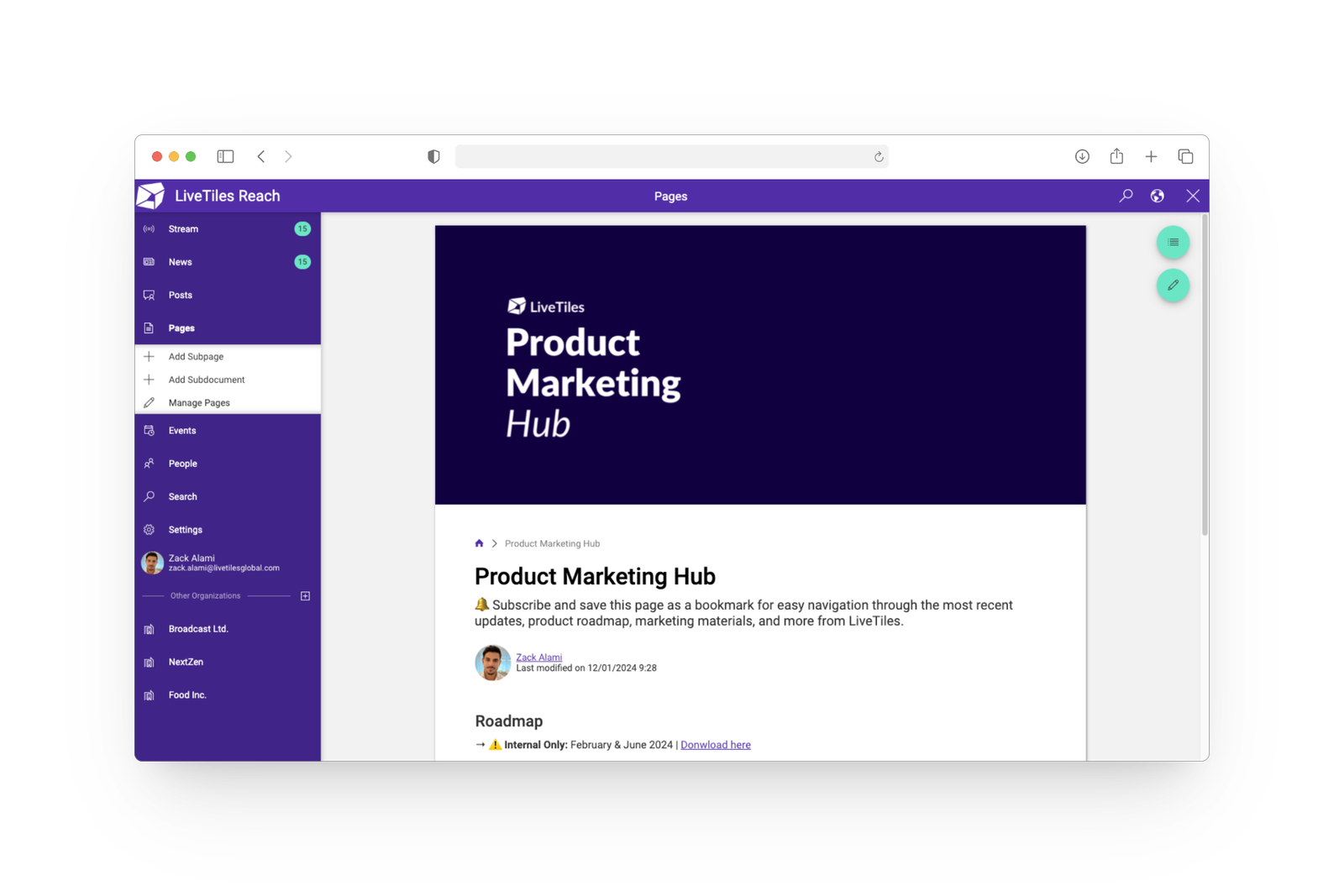
The content organization strategy required mapping every GTM asset to user needs. I structured the hub around how teams actually worked rather than how product marketing organized internally. Battlecards lived alongside competitive insights. Roadmaps connected to release notes. Demo environments linked to technical documentation. This user-centric taxonomy made materials discoverable without requiring users to understand product marketing’s internal structure.
Governance was critical. I established clear ownership for each content category, assigned update responsibilities, and created a quarterly review process tied to product release cycles. This meant roadmaps refreshed with each release, battlecards updated when competitive positioning shifted, and presentations versioned clearly to prevent confusion.
Training and enablement required more than pointing people to a new location. I developed onboarding materials showing specific use cases: how to prep for customer meetings, how to find competitive intelligence, how to access regional marketing assets. I conducted live training sessions across regions, recorded walkthroughs for asynchronous learning, and created quick reference guides for common tasks.
The change management approach recognized that habits die hard. I worked with sales leadership to reinforce hub usage in team meetings, highlighted success stories of reps finding materials quickly, and gradually deprecated old SharePoint locations after confirming content migration was complete.
Solution
I executed the hub buildout across three parallel workstreams: content consolidation, platform configuration, and adoption enablement.
For content consolidation, I audited all six existing locations, identified authoritative versions of materials, and archived outdated content. This reduced the total volume by 70% while ensuring what remained was current and accurate. The pruning process revealed how much redundancy and staleness had accumulated across acquisition tenants.
The hub structure organized content into five core categories: Product Information (roadmaps, release notes, feature specs), Sales Enablement (battlecards, pitch decks, demo guides), Competitive Intelligence (battlecards, win/loss analysis, positioning), Marketing Resources (templates, brand guidelines, campaign assets), and Customer Success (renewal playbooks, upsell frameworks, health score guides).
Each category included clear metadata: content owner, last updated date, next review date, and regional applicability. This transparency built trust that materials were current and gave teams confidence using content in customer conversations.
The platform configuration leveraged LiveTiles’ own intranet capabilities, demonstrating product value while solving an internal need. I designed intuitive navigation, implemented robust search functionality, and created filtered views so sales reps in EMEA saw relevant regional content without wading through APAC-specific materials.
Training delivery included live sessions for each regional team, recorded walkthroughs available on-demand, quick reference cards for common use cases, and office hours for questions during the first month post-launch. I also created a feedback mechanism so users could request missing content or report outdated materials.
The update cadence aligned with product release cycles. Roadmaps refreshed quarterly, battlecards updated as competitive landscape shifted, and presentations versioned clearly with “current” and “archived” labels. This regular maintenance prevented the hub from becoming another stale repository.
Throughout execution, I coordinated with IT for platform configuration, sales leadership for training scheduling, and product teams for content accuracy. The cross-functional alignment ensured the hub served real team needs rather than product marketing’s internal organization preferences.
Results
The Product Marketing Hub achieved adoption targets and established sustainable processes for ongoing content management.
86% of the 48-person global sales and customer success team accessed the hub within the first quarter, demonstrating strong initial adoption across all regions. This adoption rate validated both the content organization and the training approach, showing teams found value immediately rather than abandoning the hub after initial curiosity.
The content quality improved dramatically. Reducing outdated materials by 70% meant teams worked from current, accurate resources rather than stale presentations or obsolete battlecards. The quarterly update cadence tied to product releases ensured materials stayed synchronized with actual product capabilities, preventing the drift that plagued previous scattered locations.
Sales team feedback indicated significant time savings. Reps reported finding materials in minutes rather than hours, allowing them to spend more time with customers and less time hunting for resources. The searchability and clear categorization made onboarding new sales reps faster since they could self-serve common resources rather than interrupting colleagues.
The governance model proved sustainable. Clear content ownership and regular review processes meant the hub stayed current beyond the initial launch. Product marketing maintained accountability for accuracy while sales leadership reinforced usage in team practices.
Beyond quantitative metrics, the hub created organizational benefits. Regional teams aligned on consistent messaging since everyone used the same materials. Customer success gained visibility into product roadmaps for renewal conversations. Marketing teams accessed brand assets without creating shadow repositories. The hub became the definitive source for go-to-market materials across functions.
The project also demonstrated product value internally. By using LiveTiles’ intranet capabilities to solve a real business problem, we created a proof point for customer conversations about digital workplace solutions. Sales reps could show prospects how we used our own product for internal enablement.
FAQ
What drove the 86% adoption rate in the first quarter?
Three factors: solving real pain (reps hated searching six locations), making it easier than alternatives (better search and navigation than scattered SharePoint sites), and leadership reinforcement (sales leadership promoted usage in team meetings). The training also focused on specific use cases rather than generic platform tours, showing reps exactly how to prep for customer meetings or find competitive intelligence.
How did you maintain content accuracy after launch?
Clear ownership and quarterly update cadence tied to product releases. Each content category had a designated owner responsible for accuracy, and we built review processes into existing product release workflows. This made maintenance a habit rather than an afterthought, preventing the hub from becoming another stale repository.
What was the biggest challenge in building the hub?
Content consolidation across six locations from multiple acquisitions. Determining which version was authoritative, reconciling conflicting information, and pruning outdated materials required significant manual work. The 70% reduction in content volume came from identifying and archiving duplicates, outdated versions, and materials no longer relevant to current GTM strategy.
”Zack has a keen understanding of establishing the key elements for his digital outreach, to drive awareness and establish Siteimprove in Southern Europe.
Rie LindgrenHead of Marketing”He's a natural leader who understands the business environment and knows how to integrate people in a team. His main values are flexibility, discipline, and empathy.
Nil DaunisB2B Sales Manager”Zack has taught me a lot, not only about how to approach new challenges but how things happen to those who fight for them.
Carmen GarciaProject Analyst”Zack is a true doer! His motivation and outstanding hard work, along with his great understanding of Siteimprove’s customers made him a key asset in their Marketing team.
Nada ThoumierPartner Manager
Recent Projects
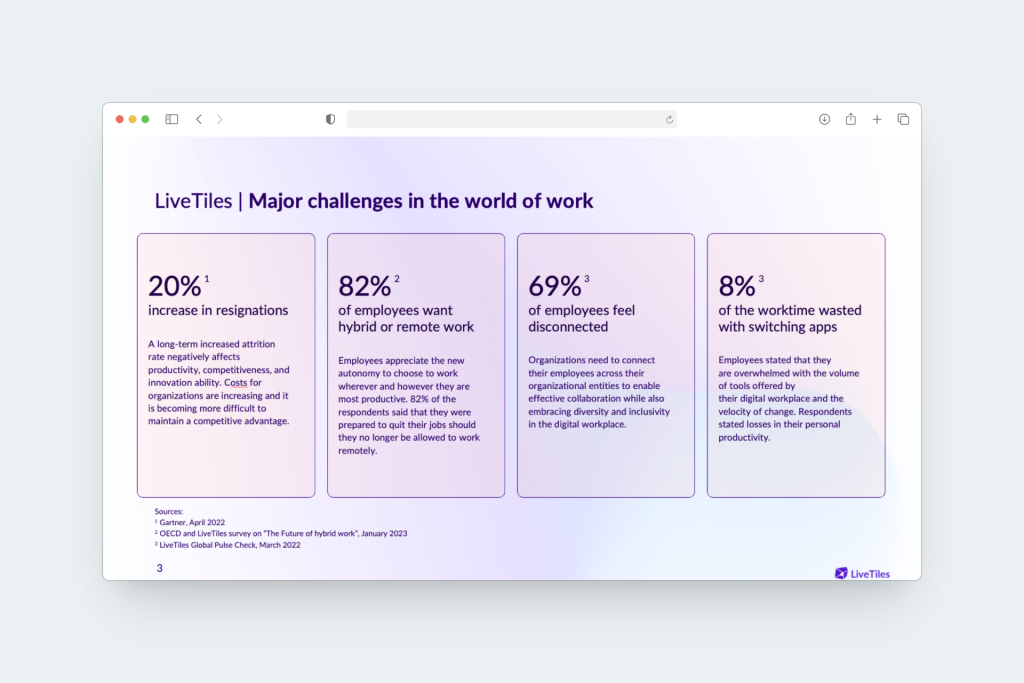
Achieving First-Time Gartner Magic Quadrant Inclusion
Achieving First-Time Gartner Magic Quadrant Inclusion
Read More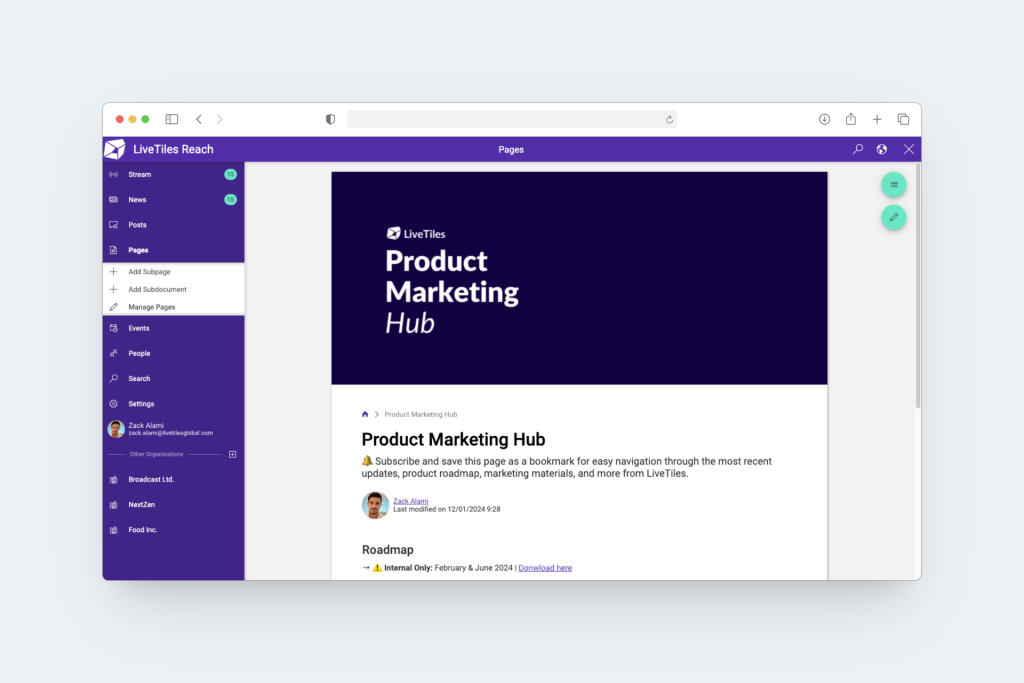
Building a Product Marketing Hub for Sales Enablement