

Company: LiveTiles
PMM Project
PMM Framework: Seasonal Release Cadence
17
+
Product Launches
TL;DR
- Built seasonal release framework enabling 17 product launches in one year after 12+ months of no launches
- Established three major releases per year (Spring, Summer, Winter) with bi-weekly minor releases
- Created repeatable GTM process coordinating product, sales, marketing, and CS across regions
- Reduced time-to-market while improving feature adoption through predictable launch rhythm
- Transformed sales from reactive to proactive with advance visibility into product roadmap
Context
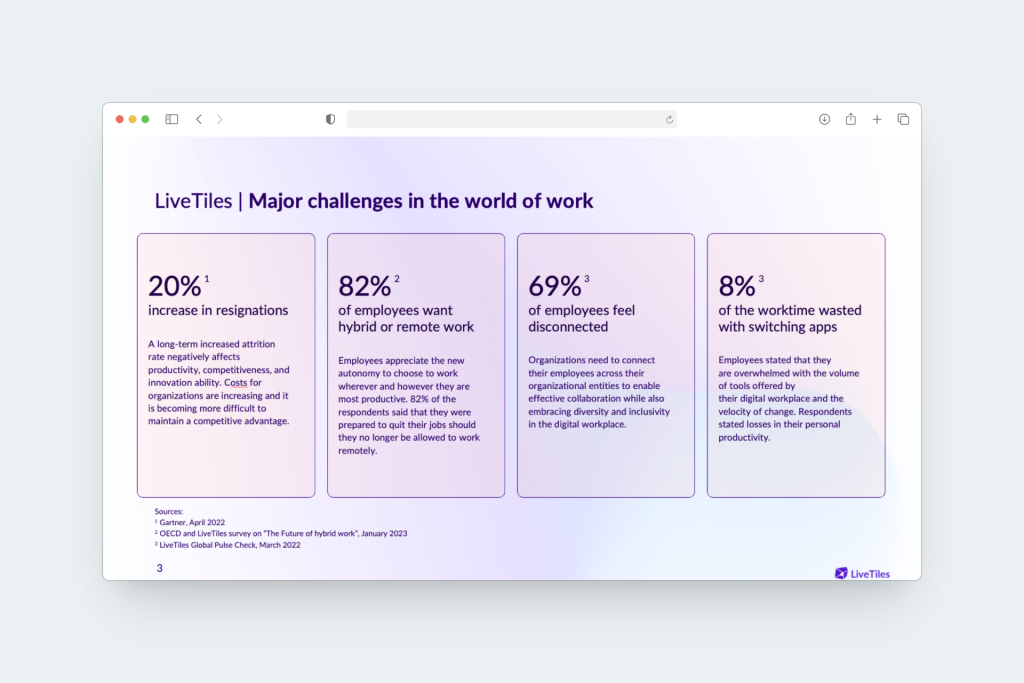
LiveTiles faced a critical product velocity problem. Despite active product development, the company hadn’t launched new features to market in over a year. Engineering built capabilities, but no coordinated process existed to bring them to customers. This launch paralysis created multiple business problems that compounded over time.
Sales teams operated reactively without visibility into upcoming features. They couldn’t build pipeline around new capabilities or set customer expectations for product evolution. Competitive deals stalled when prospects asked about roadmap, and sales couldn’t articulate future direction with confidence. The lack of predictability made it impossible to align go-to-market efforts around product momentum.
Customers grew concerned about their investment. Without visible product innovation, they questioned whether LiveTiles was still actively developing the platform. Renewal conversations became defensive rather than expansive, with customer success teams unable to point to recent improvements or upcoming capabilities that justified continued investment.
Internally, teams lacked coordination. Product built features in isolation from marketing needs. Marketing couldn’t plan campaigns without knowing launch timing. Customer success couldn’t prepare support resources. The ad hoc approach meant every launch attempt required starting from scratch, leading to exhaustion that prevented launches from happening at all.
The business impact was measurable. Pipeline generation from new product capabilities stalled. Customer churn risk increased as visible innovation disappeared. Competitive positioning weakened as competitors shipped visible improvements while LiveTiles appeared stagnant despite active development.
Approach
As Head of Product Marketing, I led the initiative to establish a seasonal release cadence with a hypothesis: predictable rhythm would unlock launches through coordination, not heroic effort. The goal wasn’t just shipping features but creating a sustainable framework that made launches repeatable.
I worked directly with the CTO and product leadership to design the release structure. The framework centered on three major releases per year (Spring in February, Summer in June, Winter in October) complemented by bi-weekly minor releases for bugfixes and small improvements. This balance provided meaningful moments for customer communication while maintaining continuous improvement cadence.
The timing aligned with business cycles. February kicked off the year with vision-setting features. June capitalized on mid-year budget availability. October positioned capabilities for end-of-year planning. The seasonal rhythm created natural anticipation cycles that marketing could build campaigns around.
Process design required mapping the entire launch lifecycle. I created a three-phase framework: pre-release (product and marketing preparation), release (internal and external communication), and post-release (adoption tracking and feedback). Each phase had clear deliverables, ownership, and timelines that removed ambiguity about what needed to happen when.
Pre-release work included internal roadmap sessions held twice per release cycle. The first session (three months before launch) walked through roadmap items, product strategy, and planned capabilities. The second session (one month before launch) provided pre-release updates and product demos. These sessions gave sales, customer success, and regional teams advance visibility to prepare for launches rather than reacting to surprises.
Launch tiering became critical for resource allocation. Not every feature warranted full-market campaigns. I established tiering criteria based on customer impact, competitive differentiation, and revenue potential. Tier 1 launches received comprehensive GTM support including press releases, customer events, and sales enablement. Tier 2 focused on existing customer communication. Tier 3 went into release notes with minimal separate promotion. This tiering prevented launch fatigue while ensuring appropriate investment matched business impact.
Measurement frameworks provided accountability. I established metrics for each launch tracking feature adoption rates, pipeline generated from launch campaigns, customer satisfaction with new capabilities, and support ticket volume indicating adoption friction. These metrics informed iteration on both product features and GTM execution.
Cross-functional coordination required ongoing stakeholder management. I aligned product teams on launch readiness criteria, marketing teams on campaign development timelines, sales teams on enablement needs, and customer success teams on adoption support resources. Regular coordination meetings prevented surprises and maintained launch momentum.
Solution
I executed the seasonal release cadence across three integrated workstreams: process infrastructure, launch execution, and measurement systems.
The process infrastructure established repeatable workflows for every launch. I created launch playbooks detailing responsibilities across pre-release, release, and post-release phases. Product teams knew when to freeze features for release. Marketing knew when to start campaign development. Sales knew when enablement materials would be available. Customer success knew when to expect support volume increases.
Pre-release coordination involved two internal roadmap sessions per release cycle. These sessions aligned global teams across EMEA, APAC, and US on upcoming capabilities, positioning strategy, and customer messaging. The sessions transformed sales from reacting to launches into actively building pipeline around upcoming features. Sales reps could tell prospects about capabilities in development, creating anticipation that accelerated deal timelines.
Launch execution required comprehensive GTM materials for each release. I developed release notes highlighting new features and improvements, sales enablement materials including battlecards and demo scripts, customer communication through email campaigns and in-product messaging, and external marketing including social media campaigns, press releases, and webinars. The materials scaled based on launch tier, ensuring resource efficiency while maintaining quality.
The measurement systems tracked adoption and business impact. I implemented analytics tracking feature usage post-launch, pipeline attribution from launch campaigns, customer feedback collection through surveys and support channels, and adoption friction identification through support ticket analysis. This data informed both product iteration and GTM optimization for subsequent launches.
Customer communication strategy emphasized investment protection. Each release reinforced that LiveTiles actively developed the platform, addressing the concern that had built during the launch drought. Customers saw their investment continuously improving, reducing churn risk and creating expansion opportunities through new capabilities.
Throughout the year, I orchestrated 17 product launches across the three seasonal releases. This included major capabilities like the first AI-powered features, workflow improvements, integration expansions, and performance enhancements. Each launch followed the established framework, creating predictable cadence that teams could plan around.
The coordination extended beyond product marketing. I worked with product teams to ensure features met launch readiness criteria, with marketing to develop campaigns aligned to launch timing, with sales to prepare field teams for new capabilities, and with customer success to support adoption post-launch. This cross-functional alignment transformed launches from episodic chaos into systematic execution.
Results
The seasonal release cadence delivered measurable velocity and business impact across multiple dimensions.
17 product launches shipped in one year after 12+ months of no launches, demonstrating that structured process enabled velocity impossible with ad hoc approaches. The seasonal rhythm provided predictability that teams could plan around, removing the coordination paralysis that had prevented previous launches.
Time-to-market improved dramatically. Features no longer sat in development limbo waiting for launch coordination. The predictable cadence meant product teams built toward known release dates, marketing prepared campaigns in advance, and sales anticipated capabilities in customer conversations. The efficiency gains compounded across releases as teams learned the rhythm.
Feature adoption rates improved with coordinated launches. Rather than releasing features quietly and hoping customers discovered them, the GTM process ensured customers knew about capabilities and understood their value. Sales enablement meant reps actively promoted new features in customer conversations, accelerating adoption beyond passive discovery.
Pipeline generation from product launches became measurable and repeatable. Sales teams built deals around upcoming capabilities, using roadmap visibility to advance opportunities that previously stalled. The predictable cadence meant marketing could plan campaigns generating qualified leads rather than scrambling to promote launches reactively.
Customer satisfaction improved through visible innovation. The regular releases demonstrated LiveTiles’ commitment to platform investment, addressing concerns that had emerged during the launch drought. Renewal conversations shifted from defensive to expansive as customer success teams could point to continuous improvement and upcoming capabilities justifying continued investment.
Sales transformation from reactive to proactive represented a significant cultural shift. With advance visibility into roadmap and predictable launch timing, sales reps actively positioned upcoming capabilities in deals rather than waiting for features to ship. This proactive approach accelerated deal velocity and improved win rates against competitors.
The framework created organizational benefits beyond immediate launches. Cross-functional teams developed shared understanding of launch requirements and timelines. The repeatable process meant new team members could onboard quickly rather than learning ad hoc approaches. The measurement systems provided data informing both product priorities and GTM optimization.
Beyond quantitative metrics, the seasonal cadence established LiveTiles’ market presence as an actively innovating platform. Industry observers noted the consistent release rhythm. Customers appreciated the predictability. Competitors faced continuous feature announcements that required response.
The project demonstrated that launch velocity stems from process discipline, not product complexity. By establishing repeatable frameworks, clear ownership, and predictable timing, we enabled 17 launches in a year where previously none occurred.
FAQ
How did the seasonal cadence improve time-to-market
Predictability removed coordination bottlenecks. Product teams built toward known release dates rather than uncertain launch timing. Marketing prepared campaigns in advance instead of scrambling post-feature completion. Sales anticipated capabilities in customer conversations. The structured process meant features shipped when ready rather than waiting for coordination to occur, dramatically reducing time from development completion to market availability.
What made the three-release-per-year rhythm work?
Quarterly cadence provided meaningful customer communication moments without overwhelming teams or markets. February kicked off the year with vision-setting features. June captured mid-year budget cycles. October positioned capabilities for year-end planning. The seasonal timing aligned with business cycles while giving teams adequate preparation time between releases. Bi-weekly minor releases maintained continuous improvement between major launches.
How did this transform sales from reactive to proactive?
Internal roadmap sessions three months before each release gave sales advance visibility into upcoming capabilities. Reps could tell prospects about features in development, creating deal momentum around future capabilities rather than waiting for launches. The predictable cadence meant sales could confidently set customer expectations about timing, using roadmap as a competitive differentiator and deal accelerator rather than reacting to competitor announcements.
”Zack has a keen understanding of establishing the key elements for his digital outreach, to drive awareness and establish Siteimprove in Southern Europe.
Rie LindgrenHead of Marketing”He's a natural leader who understands the business environment and knows how to integrate people in a team. His main values are flexibility, discipline, and empathy.
Nil DaunisB2B Sales Manager”Zack has taught me a lot, not only about how to approach new challenges but how things happen to those who fight for them.
Carmen GarciaProject Analyst”Zack is a true doer! His motivation and outstanding hard work, along with his great understanding of Siteimprove’s customers made him a key asset in their Marketing team.
Nada ThoumierPartner Manager
Recent Projects
Achieving First-Time Gartner Magic Quadrant Inclusion
Achieving First-Time Gartner Magic Quadrant Inclusion
Read More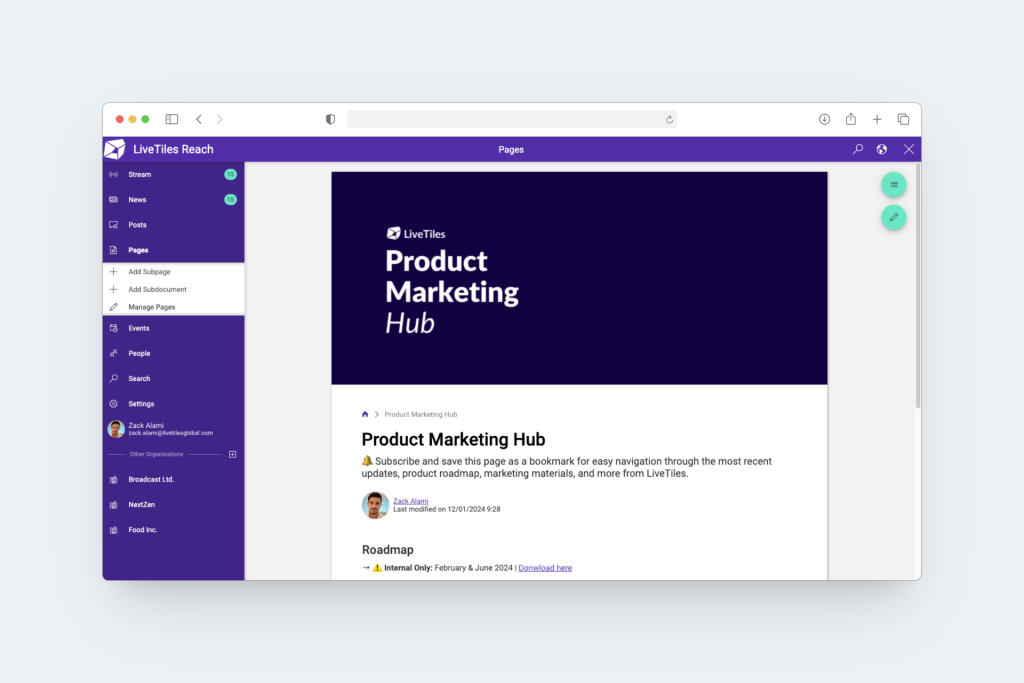
Building a Product Marketing Hub for Sales Enablement