


TL;DR In this article I’ll explain why the skill that has made the biggest difference in my career as a PMM isn’t experience, industry knowledge, or writing ability. It’s agency: the belief that you can shape your circumstances, and the willingness to act on that belief.
The PMMs who’ve had the biggest impact at companies I’ve worked with share a common trait. It’s not the longest resume or the deepest expertise in a particular vertical. It’s that they didn’t wait for permission. They saw a problem and fixed it, sometimes before anyone else even knew it existed. They took responsibility for outcomes instead of blaming circumstances. They treated their role not as a service desk, but as a position of real influence.
That’s high agency. And I believe it’s the single most important skill a PMM can build.
What high agency actually means in product marketing
High agency means you don’t wait for a brief. You don’t ask “what should I work on today?” and wait for someone to hand you a list. You look at the business, you see where things are broken, and you start fixing them. High agency means you take responsibility for outcomes instead of treating yourself as a function that executes what others decide.
Here’s a “meme” which illustrates this idea:
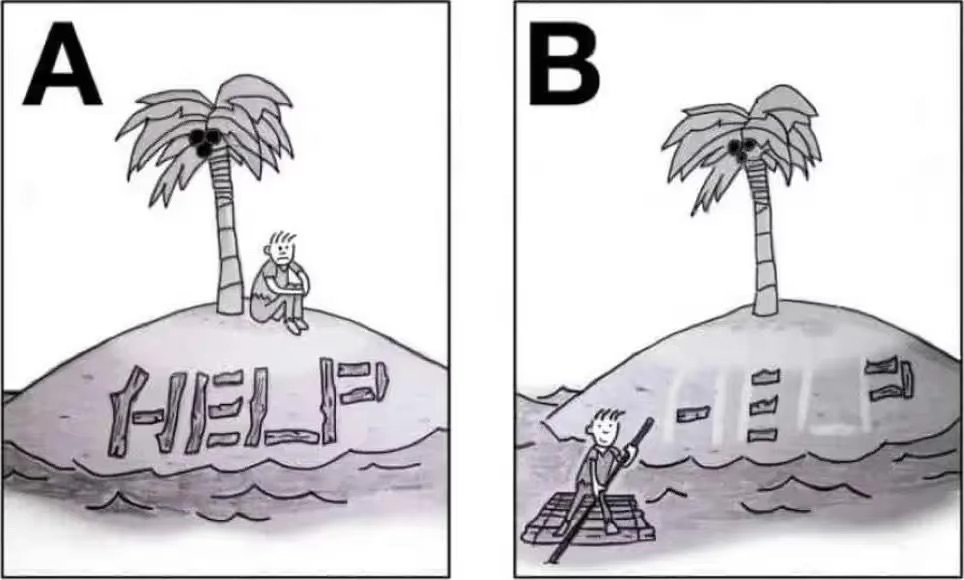
It also means you work with reality instead of against it. If your sales team isn’t using your battle cards, you don’t blame them for being lazy. You figure out why the battle cards aren’t meeting their needs and you fix that. If your positioning message isn’t landing with customers, you don’t wait for a scheduled “positioning review” in Q3. You notice it’s not working and you change it.
High agency is not about being reckless or ignoring organizational structure. It’s about having enough conviction in your perspective that you move forward without needing explicit permission for every decision.
It’s about accepting that you own outcomes, not inputs.
The high-agency PMM in action
I can think of specific moments that changed how I think about this.
I worked with a PMM once who noticed our sales team was losing deals to a specific competitor. Consistently losing deals where our technical capabilities were actually superior. She didn’t wait for the sales leader to escalate it up the chain. She set up win/loss calls directly with the lost customers. No approval. No formal program. She just started talking to people and taking notes.
What she found completely changed our go-to-market approach. The problem wasn’t that we were bad at what we did. The problem was that we were leading with the wrong value prop entirely. We were talking about technical superiority when customers cared about implementation speed. That insight came from someone who had the agency to see a problem and investigate it without waiting for permission.
That PMM didn’t just report findings either. She came back with a proposal for how to reposition the company, which features to emphasize, which messaging to kill. She was wrong about a couple of things, but the direction was right. Within two months, our win rate against that competitor went up 40%. That’s not because someone finally gave her a project to work on. It’s because she took responsibility for an outcome that nobody had assigned to her.
I’ve also seen this play out in sales enablement. A PMM sees that reps aren’t using the materials you’ve created. The default response is to assume it’s not your problem, or that it requires budget or leadership approval to fix.
The high-agency move is different. Go to lunch with three reps, ask what they actually need, and find out that your “best-in-class” sales kit takes 15 minutes to find anything and only works on desktop. So you build a simple Slack bot that delivers relevant talking points based on a one-word query. No steering committee. No project plan. Just ship it. Suddenly reps are using it constantly.
Same thing when positioning isn’t working mid-campaign. I’m talking mid-flight. Early data is showing the message isn’t landing. The safe move is to report it in the weekly sync, maybe suggest a test, hope someone in leadership agrees it’s worth changing.
The high-agency move is to look at the data, make a call about what’s not working, propose a fix, and get it live before the campaign ends. That decision might upset someone. But the outcome matters more than the politics.
What happens without agency
I’ve been there myself. Early in my career, I defaulted to waiting for direction. And I’ve seen the pattern repeat across teams I’ve worked on.
You ask for briefs. You wait for leadership to define the problem before you attempt to solve anything. You treat the role as “the person who makes things pretty” or “the person who writes the copy that the product team provides.” And then you wonder why the work doesn’t feel impactful.
I’ve seen PMMs (including past me) spend months building what they thought was important marketing strategy, only to find out nobody actually cared because they never talked to customers or sales or the market. They built it in a vacuum, based on assumptions.
I’ve seen the 47-slide recommendation deck presented to leadership, hoping someone will make a choice. In that dynamic, you’re not a marketer. You’re an analyst. You’ve outsourced the decision-making to someone who understands the business less than you do.
I’ve seen campaigns executed exactly as specified, even when early metrics show they’re not working. “I was following the brief.” That’s not a partnership. That’s a service desk.
The cost compounds over time. You don’t influence strategy. You don’t shape how the market perceives the company. You don’t drive pipeline. You manage projects. Your career moves sideways because you’re stuck in execution mode instead of building toward strategy.
High agency is a skill, not a trait
Here’s something that matters: you don’t need to be born with high agency. I don’t think it’s a personality thing. It’s a skill, and like all skills, it can be built.
When I was early in my career, I had low agency. I waited for direction. I asked permission. I assumed that if something wasn’t explicitly assigned to me, it wasn’t my job. What changed wasn’t some personality shift. It was that I started seeing the cost of that approach. I started small. I noticed something broken and fixed it without asking. I talked to customers nobody told me to talk to. I proposed changes instead of just reporting problems.
Each of those moments was a little uncomfortable. The first time you push back on positioning because you think it’s wrong, you’re taking a risk. The first time you go around the normal approval process because you see an opportunity, you’re being a little bit insubordinate. That’s okay. That’s how you build the muscle.
It starts with noticing. It starts with actually paying attention to where things aren’t working. Most PMMs are too focused on executing what they’ve been assigned to notice the bigger problems. You have to shift your attention to the seams. Where is the go-to-market approach falling apart? Where are customers confused? Where is sales struggling? Those are your spots.
Then it’s about small tests. You don’t need permission to talk to customers. You don’t need approval to analyze win/loss data. You don’t need a budget to improve a single sales resource. Start there. Do the work. See what happens. Once you have data, the conversation becomes different.
Finally, it’s about owning outcomes instead of owning inputs. Stop thinking about “did I complete this project on time?” and start thinking about “did this actually move the needle?” The first question is about execution. The second is about strategy. Strategy requires agency.
What happens when you build high agency
When a team of PMMs operates with high agency, things change fast. You don’t have long approval cycles because people aren’t asking for permission. You notice problems early and fix them early, so they don’t become crises. You talk to customers constantly, so you’re never working off stale data. You have strong opinions, but you hold them loosely, so you can change direction quickly when evidence says you should.
When you’re constantly looking for problems to solve, you see opportunities that others miss entirely.
You also generate more ideas. When you’re constantly looking for problems to solve, you see opportunities that others miss entirely. You might ship something that doesn’t work, but you’ll learn from it fast and move on. Teams stuck in planning and approval cycles ship fewer things, and learn slower as a result.
And you have more influence. Sounds obvious, but people listen to PMMs who take responsibility for outcomes. They stop listening to PMMs who show up with presentations asking for permission (sound familiar?)
High agency in the era of AI
AI is changing the PMM role fast, and I think it makes high agency more important, not less.
Here’s why. AI tools are getting very good at the execution layer of product marketing. They can draft messaging, summarize call transcripts, generate competitive comparisons, build content outlines. The tasks that used to take hours now take minutes. That’s real, and it’s only accelerating.
But AI doesn’t know what to work on. It doesn’t look at a business, identify the real problem, and decide to fix it. It doesn’t notice that the sales team stopped using your battle cards last month. It doesn’t pick up on the disconnect between how your product team talks about the roadmap and how customers actually describe their problems.
It doesn’t walk over to the CRO’s desk and say “I think we’re positioning this wrong, here’s what I’m seeing.”
That’s agency. And it’s the one thing AI can’t replicate.
The PMMs who will thrive in an AI-powered world are the ones who use these tools to move faster on the things they’ve already decided matter. They use AI to compress execution time so they can spend more time on the strategic work that actually requires human judgment: choosing what problems to solve, building cross-functional trust, reading the room, making the call when data is incomplete.
The risk is the opposite. If you’re already waiting for briefs and executing what others decide, AI makes that work easier to automate entirely. The execution-only version of the PMM role gets thinner every year. But the high-agency version, the PMM who owns outcomes and shapes strategy, becomes more valuable because they can now move at twice the speed with AI handling the grunt work.
I’ve experienced this firsthand. As a Certified AI Product Manager, I’ve integrated AI into my own PMM workflow. The tools save me hours every week. But the decisions about what to build, what to kill, where to focus, those still come from paying attention, asking the right questions, and having the conviction to act. AI amplifies agency. It doesn’t create it.
The hard part
This isn’t easy. High agency requires you to accept risk. You might be wrong. You might make a decision that someone more senior disagrees with. You might ship something that doesn’t move the needle. You might stick your neck out for positioning change and have it not work out.
That’s the price. Playing it safe is easier. You can point at the brief, the approval, the steering committee. You can say “I was doing what I was told.” You’re protected.
High agency means you don’t have that protection. You own the outcome.
I think that trade is worth it. I’d rather be part of a business that moves fast and ships imperfectly than one that never moves at all because it’s too busy waiting for permission.
FAQ
What if my organization punishes people for overstepping their authority?
That’s a real constraint, and it might mean the organization isn’t right for you. But I’d push back a little here. Most organizations don’t actually punish high-agency behavior. They punish the outcomes of bad decisions. If you show up with data, with customer research, with a clear rationale for a change, most leaders will back you. What they punish is actions that look like you’re not thinking things through. There’s a difference between “I changed our messaging because I had a hunch” and “I changed our messaging because our lost deals data showed this specific objection.” The first is overstepping. The second is PMM work.
How do I build high agency if I’m junior and don’t have much credibility yet?
Start small. You don’t need to reposition the company. You need to fix one thing that’s broken. Notice where customers are confused, where reps aren’t using your materials, where messaging isn’t working. Then investigate it. Talk to people. Find out why. Come back with a simple fix. Ship it. Measure it. Do that three times and you’ll have built more credibility than you would’ve in a year of executing other people’s ideas perfectly.
What’s the line between high agency and just doing what you want without alignment?
High agency isn’t recklessness. You still need to operate inside organizational reality. The difference is where you put your energy. “What should I do?” is asking for permission. “I think we should do this, here’s why, and here’s my plan” is asking for feedback. The second actually involves more people, not fewer. It’s just that you’re leading the conversation instead of waiting for the conversation to happen.
Questions about building a high-agency PMM practice? Let’s connect, always happy to talk through what’s working.